
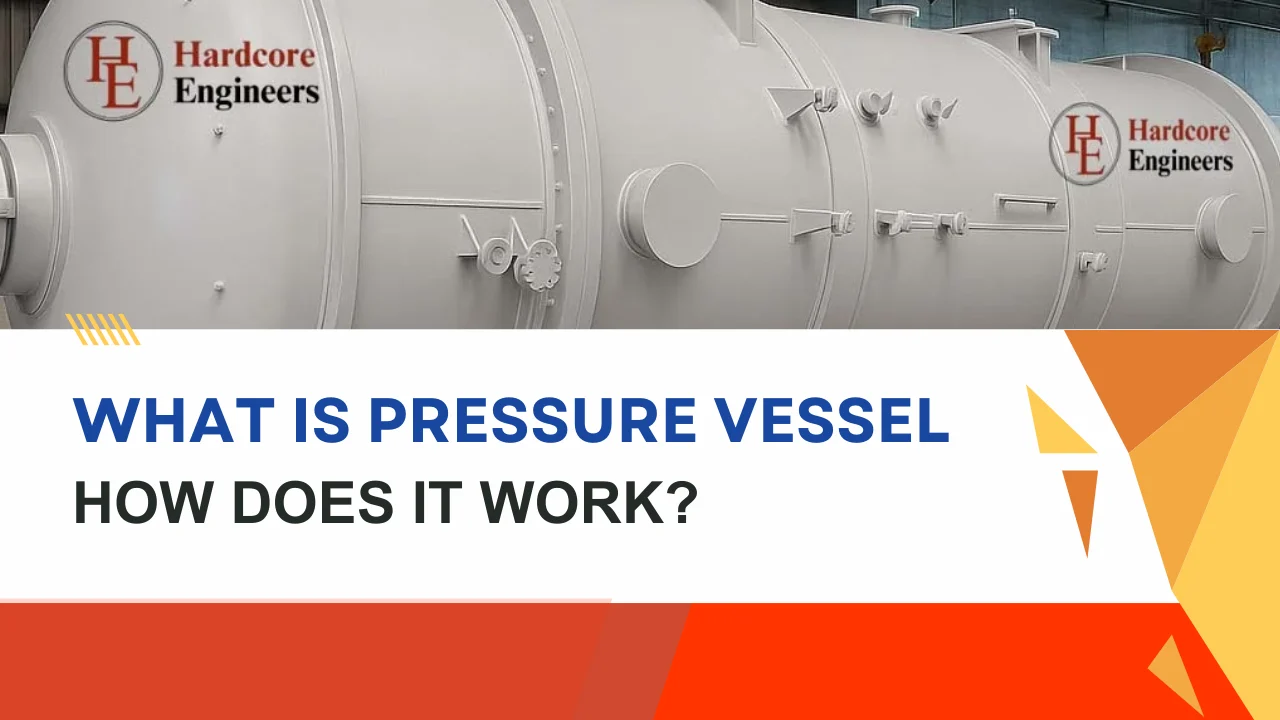
Pressure vessels play a critical role in many industrial processes, enabling the safe storage and handling of fluids under high pressure or temperature. From chemical plants and oil refineries to power generation units and pharmaceutical industries, pressure vessels are essential equipment designed to operate reliably under extreme conditions. Understanding what a pressure vessel is and how it works helps industries choose the right design and manufacturer for safe and efficient operations.
What is a Pressure Vessel?
A pressure vessel is a closed container specifically designed to hold gases or liquids at a pressure substantially different from the ambient pressure. These vessels are engineered to withstand internal or external pressure without failure, leakage, or deformation.
Pressure vessels are commonly constructed using materials such as carbon steel, stainless steel, alloy steel, or other high-strength metals. Their design follows strict international standards and codes to ensure safety, durability, and performance under continuous pressure conditions.
Industries rely on pressure vessels to store, process, or transport pressurized fluids safely while maintaining temperature and pressure stability throughout operations.
Importance of Pressure Vessels in Industry
Pressure vessels are vital because uncontrolled pressure can lead to severe accidents, equipment damage, and safety hazards. A well-designed pressure vessel ensures:
- Safe containment of pressurized fluids
- Controlled chemical and thermal processes
- Reduced risk of explosions or leaks
- Long service life under harsh operating conditions
Because of these critical functions, pressure vessels must be manufactured by experienced and certified manufacturers who understand engineering standards and industrial requirements.
How Does a Pressure Vessel Work?
The working principle of a pressure vessel is based on its ability to contain pressure safely while maintaining structural integrity.
When a fluid (gas or liquid) is introduced into the vessel, it exerts pressure on the internal walls. The vessel’s material, thickness, shape, and reinforcement are designed to resist this force without rupturing.
Pressure Vessel Working Principle
A pressure vessel operates on the principle of safely containing fluids under high pressure or temperature while maintaining structural integrity. Its working principles include:
- Pressure Containment: The vessel holds gases or liquids at pressures different from atmospheric pressure without leakage.
- Uniform Stress Distribution: Cylindrical or spherical shapes help distribute internal pressure evenly across the vessel walls.
- Material Strength: High-strength materials like carbon steel or stainless steel resist the stresses created by internal pressure.
- Wall Thickness Design: Proper thickness is calculated to withstand operating pressure and temperature safely.
- Controlled Fluid Flow: Inlet and outlet nozzles allow smooth filling and discharge of fluids.
- Safety Mechanisms: Pressure relief valves and rupture discs release excess pressure to prevent failure.
- Monitoring and Control: Gauges and sensors continuously monitor pressure and temperature for safe operation.
Working Process
- The fluid enters the pressure vessel through an inlet nozzle.
- Pressure builds up inside the vessel as per process requirements.
- The vessel walls resist internal pressure using material strength and structural design.
- Safety valves automatically release excess pressure if it exceeds safe limits.
- The processed or stored fluid exits through outlet nozzles under controlled conditions.
This controlled mechanism allows pressure vessels to operate safely even at high pressures and temperatures.
Pressure Vessel Tank
A pressure vessel tank is a specially designed container used to store gases or liquids at high pressure or temperature. It is manufactured using high-strength materials and precise engineering to safely withstand internal pressure. These tanks are widely used in industries such as chemical, oil & gas, pharmaceutical, food processing, and power plants. Equipped with safety valves and monitoring instruments, these tanks ensure secure storage, controlled operation, and long service life under demanding industrial conditions.
Advantages
- Enhanced operational safety
- Efficient process control
- Long service life
- Resistance to corrosion and high temperature
- Reduced maintenance and downtime
Hardcore Engineers – A Leading Pressure Vessel Manufacturer
Hardcore Engineers is recognized as a leading manufacturer of high-quality pressure vessels designed for demanding industrial applications. With strong engineering expertise and advanced fabrication facilities, we deliver products that meet stringent quality and safety standards.
We are manufacturing customized solutions tailored to specific process requirements. From material selection to final testing, we follow strict quality control procedures to ensure reliability, durability, and compliance with international codes.
Their vessels are widely used in chemical, pharmaceutical, oil & gas, and process industries, making Hardcore Engineers a trusted name for dependable pressure containment solutions.
Conclusion
A pressure vessel is a vital industrial component designed to safely contain fluids under pressure while maintaining structural integrity and operational efficiency. Its working principle relies on precise engineering, quality materials, and strict adherence to safety standards.
Choosing the right manufacturer is crucial for ensuring performance, safety, and long-term reliability. With its strong technical capabilities and commitment to excellence, Hardcore Engineers stands out as a leading pressure vessel manufacturer, delivering robust and efficient solutions for a wide range of industrial applications.