Rubber is one of the most versatile materials used across industries, but in its natural form, it has several limitations. It becomes sticky in hot weather, brittle in cold temperatures, and lacks the strength needed for demanding applications. To overcome these challenges, the rubber undergoes a specialized treatment known as vulcanization. This process significantly enhances the mechanical and chemical properties of rubber, making it durable, elastic, and resistant to wear.
For industries involved in rubber processing, heat treatment, and precision manufacturing, Hardcore Engineers provides advanced industrial furnace and heating solutions designed to support high-quality production processes with consistent temperature control and reliable performance.
What is Vulcanization?
Vulcanization is a chemical process in which natural or synthetic rubber is heated with sulfur and other additives under controlled temperature and pressure. During this process, sulfur atoms create cross-links between the polymer chains of rubber, transforming it into a stronger and more stable material.
The vulcanization of rubber increases elasticity, tensile strength, abrasion resistance, and thermal stability, making rubber suitable for industrial and commercial applications.
Vulcanization Definition
The vulcanization definition refers to the process of improving rubber by forming chemical cross-links between polymer molecules using sulfur or other curing agents under heat. This treatment converts soft, flexible rubber into a durable material capable of withstanding mechanical stress and varying environmental conditions.
Why Raw Rubber Needs Vulcanization
Natural rubber, obtained from latex, has several limitations:
- It becomes sticky in hot weather
- It becomes brittle in cold temperatures
- It lacks mechanical strength
- It has poor resistance to chemicals and wear
Without vulcanization, rubber cannot be used in heavy-duty industrial applications. The vulcanization process transforms weak raw rubber into a strong and reliable material.
How Vulcanization of Rubber Works
The vulcanization process involves chemical bonding between long-chain rubber molecules. Let’s understand the working step-by-step:
1. Mixing Stage
Raw rubber is mixed with:
- Sulfur (primary curing agent)
- Accelerators (speed up reaction)
- Activators (improve efficiency)
- Fillers (like carbon black for strength)
- Antioxidants (prevent aging)
This mixture is prepared in specialized mixing equipment.
2. Shaping Process
The rubber compound is shaped into the required product form using:
- Molding
- Extrusion
- Calendaring
3. Heating (Curing) Stage
The shaped rubber is heated at a controlled temperature (typically between 140°C to 180°C). During heating:
- Sulfur atoms form cross-links between rubber polymer chains
- Molecular chains become interconnected
- The structure becomes stronger and more stable
This cross-linking process is the core of vulcanization.
4. Cooling and Finishing
After curing, the rubber product is cooled and inspected. The final product is now elastic, strong, and durable.
Chemical Mechanism of Vulcanization
Rubber molecules are long polymer chains. During vulcanization:
- Sulfur atoms form bridges between these chains
- These bridges restrict movement of molecules
- The material becomes less sticky and more elastic
The number of cross-links determines the hardness and flexibility of rubber.
- Fewer cross-links = Soft rubber
- More cross-links = Hard rubber
This flexibility allows manufacturers to design rubber products for different applications.
What is Vulcanized Rubber?
Vulcanized rubber is rubber that has undergone the vulcanization process to improve its physical and chemical characteristics. Compared to untreated rubber, vulcanized rubber offers:
- Higher tensile strength
- Better elasticity
- Improved abrasion resistance
- Greater resistance to heat and chemicals
- Enhanced weather resistance
- Longer service life
- Better dimensional stability
Because of these properties, vulcanized rubber is widely used in demanding industrial environments.
Advantages of Vulcanized Rubber
Vulcanization provides several benefits:
- Improved tensile strength
- Better elasticity
- Heat resistance
- Chemical resistance
- Abrasion resistance
- Increased durability
- Reduced stickiness
- Improved load-bearing capacity
These properties make vulcanized rubber suitable for demanding industrial environments.
Industrial Applications of Vulcanized Rubber
Vulcanized rubber is used across multiple industries:
Automotive Industry
- Tires
- Engine mounts
- Gaskets
- Seals
Manufacturing Industry
- Conveyor belts
- Rollers
- Bushings
Construction Industry
- Expansion joints
- Vibration pads
Oil & Gas Industry
- Rubber linings
- Sealing components
Electrical Industry
- Insulation materials
The versatility of vulcanized rubber makes it an essential industrial material.
Why Temperature Control Matters in Vulcanization
The success of the vulcanization process depends heavily on maintaining accurate and uniform temperatures. Excessive heat can degrade the rubber, while insufficient heating may result in incomplete curing and reduced product quality.
This is why manufacturers rely on advanced industrial heating systems that provide:
- Uniform heat distribution
- Precise temperature control
- Energy-efficient operation
- Consistent curing cycles
- Improved product quality
Importance of Controlled Vulcanization
Proper temperature, pressure, and time control are critical during vulcanization. Over-curing or under-curing can result in:
- Reduced strength
- Brittleness
- Poor elasticity
- Shorter product life
This is why advanced machinery and engineering expertise are essential.
Role of Hardcore Engineers in Rubber Processing Solutions
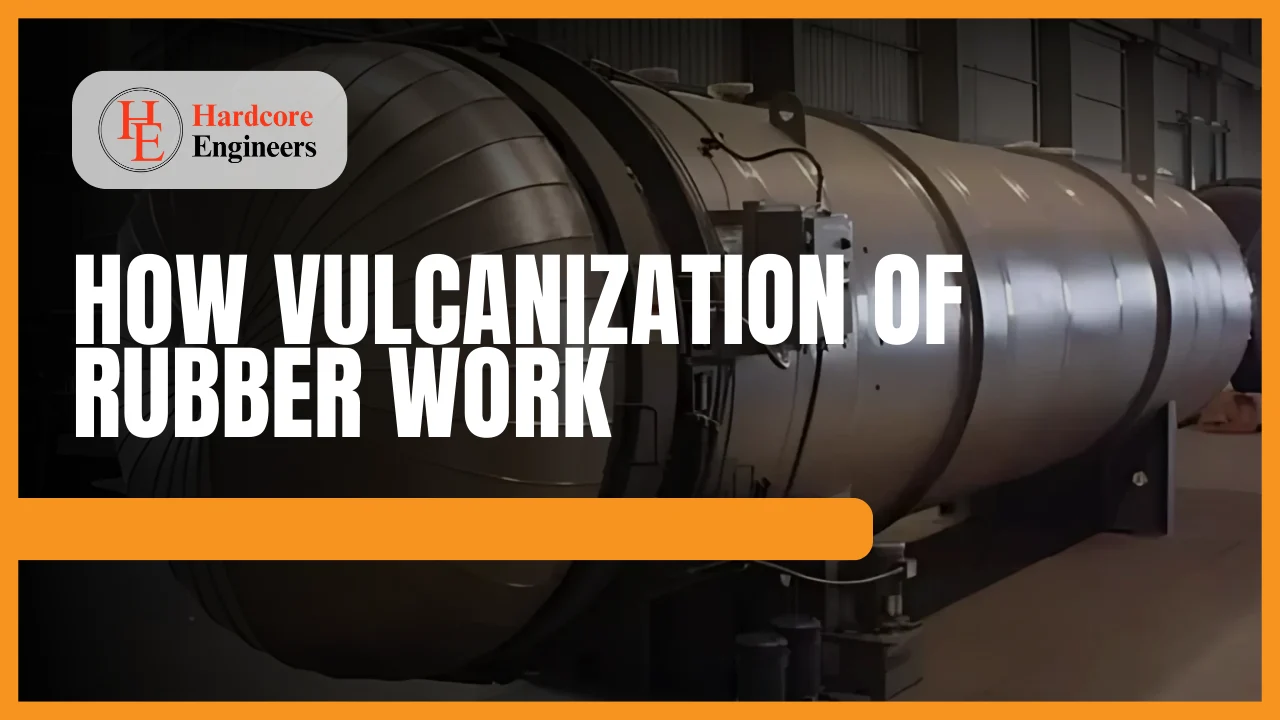
For industries requiring reliable thermal processing equipment, Hardcore Engineers manufactures high-performance industrial Rubber Vulcanizer and customized heating solutions suitable for demanding manufacturing applications. Our systems are designed to deliver consistent temperature control, operational efficiency, and dependable performance, helping industries achieve uniform processing and superior product quality across various heat treatment operations.
Why Choose Hardcore Engineers?
- Advanced vulcanization and curing systems
- Precision-engineered industrial machinery
- High-quality manufacturing standards
- Custom solutions for different industries
- Focus on durability and efficiency
Hardcore Engineers ensures that every rubber processing solution meets strict quality and performance standards, helping industries achieve reliable and long-lasting results.
Modern Innovations in Vulcanization
With technological advancements, vulcanization has evolved significantly:
- Automated curing systems
- Temperature-controlled smart presses
- Energy-efficient heating methods
- Continuous vulcanization systems
- Improved eco-friendly curing agents
These innovations improve productivity and reduce operational costs.
Common Challenges in Vulcanization
Despite its benefits, vulcanization must overcome challenges such as:
- Maintaining uniform temperature
- Preventing air bubbles
- Controlling curing time
- Ensuring consistent product quality
Advanced equipment and skilled engineering help minimize these issues.
Conclusion
Vulcanization of rubber is a crucial chemical process that transforms weak, sticky raw rubber into a strong, elastic, and durable material suitable for industrial use. By creating cross-links between rubber molecules through heating and curing agents, the process significantly enhances mechanical properties and resistance to heat, wear, and chemicals.
From automotive tires to heavy-duty conveyor belts, vulcanized rubber plays an essential role in modern industries. Hardcore Engineers, Rubber Vulcanizer Manufacturers ensure high-quality vulcanization processes, improved efficiency, and long-lasting rubber products.
Understanding how vulcanization works helps industries appreciate the science behind one of the most important materials used in today’s world.
Frequently Asked Questions
What is vulcanization?
Vulcanization is the process of heating rubber with sulfur or other curing agents to create chemical cross-links that improve its strength, elasticity, and durability.
What is vulcanized rubber?
Vulcanized rubber is rubber that has been chemically treated through the vulcanization process to enhance its mechanical, thermal, and chemical properties.
Why is vulcanization important?
It increases the strength, flexibility, wear resistance, heat resistance, and service life of rubber products used in industrial and commercial applications.
Which industries use vulcanized rubber?
Automotive, mining, manufacturing, construction, electrical, healthcare, aerospace, and food processing industries widely use vulcanized rubber products.
How does Hardcore Engineers support rubber processing?
Hardcore Engineers provides advanced industrial furnaces and customized heating solutions that ensure precise temperature control for consistent and efficient thermal processing in manufacturing industries.