
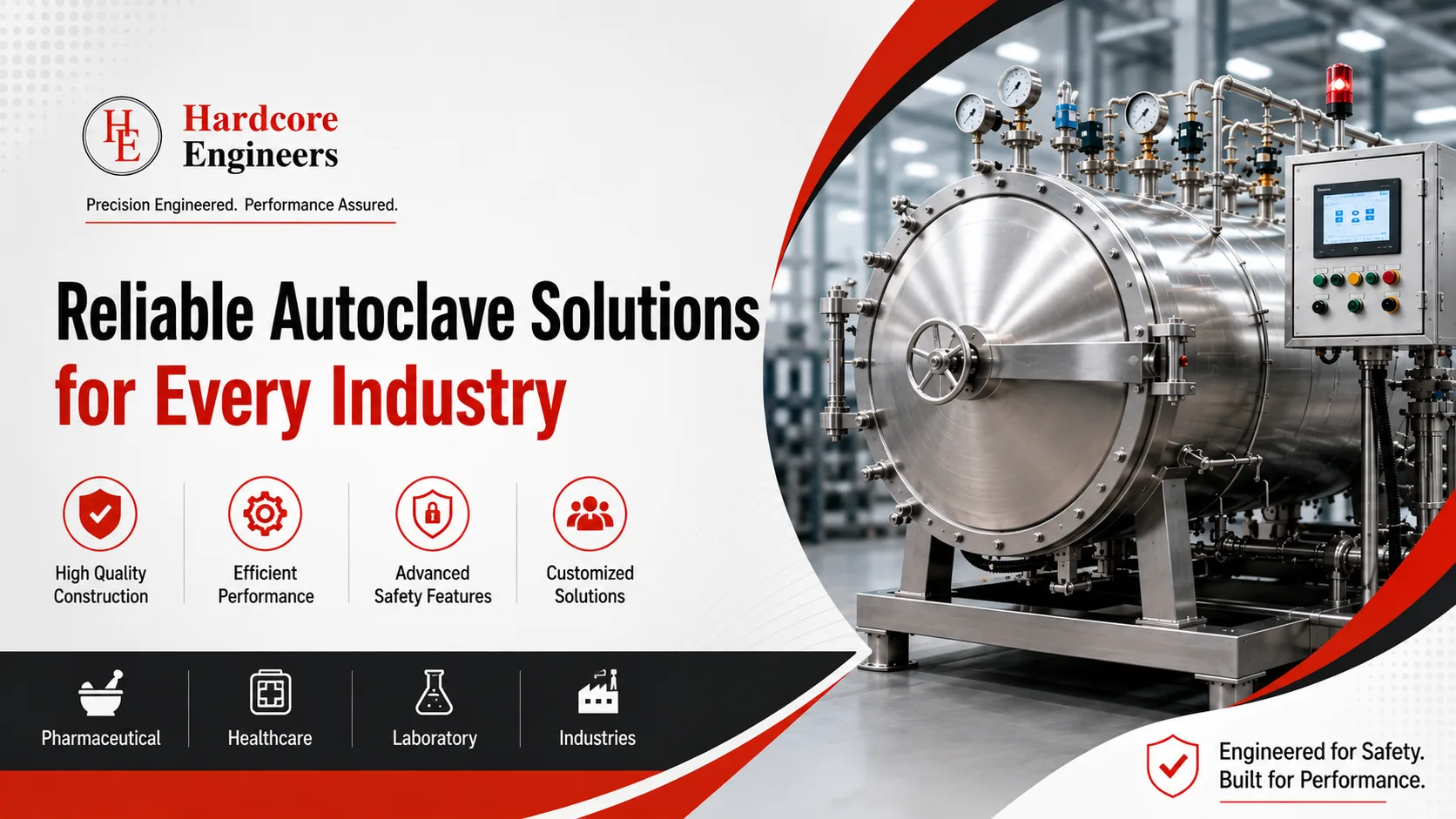
Autoclaves are essential sterilization equipment widely used in medical, pharmaceutical, laboratory, food processing, and industrial applications. These machines use high-pressure steam and controlled temperature to eliminate bacteria, viruses, fungi, and other harmful microorganisms from equipment and materials.
There are different types of autoclaves available according to industrial requirements, sterilization capacity, and application type. Understanding these autoclave types helps industries select the most suitable equipment for their operations.
Types of Autoclave
1. Vertical Autoclave
Vertical autoclaves are compact sterilization units commonly used in laboratories, clinics, research centers, and small healthcare facilities. These machines are designed with a vertical chamber structure and are suitable for sterilizing small instruments, glassware, and laboratory materials.
Features:
- Compact design
- Easy operation
- Space-saving installation
- Suitable for small-scale applications
2. Horizontal Autoclave
Horizontal autoclaves are larger sterilization systems mainly used in hospitals, pharmaceutical industries, and industrial processing plants. These machines offer higher capacity and efficient sterilization for bulk materials and equipment.
Features:
- Large chamber capacity
- Automatic control systems
- Efficient steam circulation
- Suitable for industrial-scale sterilization
3. Portable Autoclave
Portable autoclaves are lightweight and easy-to-move sterilization units used in small laboratories, clinics, and field operations. These units are ideal for applications where mobility and compact size are important.
Features:
- Lightweight structure
- Portable design
- Simple operation
- Cost-effective solution
4. High-Pressure Autoclave
High-pressure autoclaves are specially designed for industrial applications requiring sterilization under high temperature and pressure conditions. These autoclaves are commonly used in chemical processing, pharmaceutical manufacturing, and industrial research applications.
Features:
- High-pressure resistance
- Advanced safety systems
- Durable construction
- Reliable sterilization performance
5. Vacuum Autoclave
Vacuum autoclaves use vacuum technology to remove air before steam sterilization begins. These machines provide highly efficient sterilization and are widely used in hospitals and pharmaceutical industries.
Features:
- Better steam penetration
- Faster sterilization cycle
- Improved sterilization efficiency
- Suitable for complex instruments
How to Choose the Right Autoclave
Selecting the right autoclave depends on several important factors:
Capacity Requirement
Choose an autoclave according to the volume of material or instruments requiring sterilization.
Application Type
Different industries require different sterilization solutions. Laboratories, hospitals, and industrial plants may need different autoclave configurations.
Automation Level
Automatic autoclaves improve efficiency and reduce manual operation compared to semi-automatic systems.
Safety Features
Look for pressure control systems, temperature monitoring, safety valves, and automatic shut-off features for safe operation.
Material Quality
High-quality stainless steel construction ensures durability, corrosion resistance, and long service life.
Maintenance and Efficiency
Choose energy-efficient and low-maintenance autoclaves for long-term operational benefits.
How Do You Know Your Autoclave Is Actually Working?
Proper sterilization is essential in medical, laboratory, pharmaceutical, and industrial applications, which is why it is important to ensure that an autoclave is functioning correctly. Regular monitoring and performance testing help verify that the autoclave is achieving the required temperature, pressure, and sterilization cycle for effective microorganism elimination. Signs of a properly working autoclave include consistent pressure levels, accurate temperature control, successful biological and chemical indicator tests, and complete sterilization of processed materials.
Conclusion:
Hardcore Engineers offers high-quality industrial autoclaves designed for reliable sterilization performance, durability, and efficient operation. We focus on delivering precision-engineered autoclave systems suitable for medical, pharmaceutical, laboratory, and industrial applications.
Autoclaves play a critical role in maintaining hygiene, safety, and sterilization standards across multiple industries. Understanding the different types of autoclaves and their applications helps businesses choose the right sterilization equipment according to operational requirements. Selecting a high-quality autoclave ensures better efficiency, reliable performance, and long-term industrial usage.