
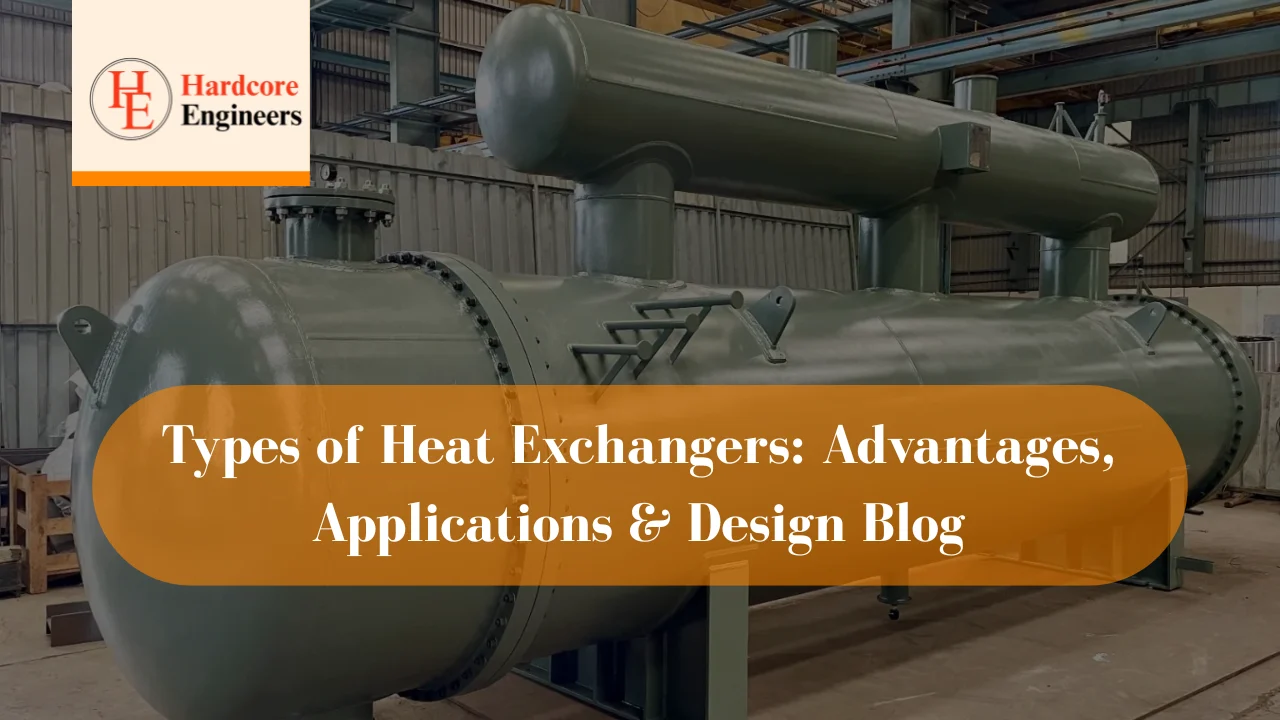
Heat exchangers are critical components in modern industrial systems, enabling efficient heat transfer between two or more fluids without direct mixing. From power plants and chemical processing units to HVAC systems and food industries, heat exchangers play a vital role in improving energy efficiency, process control, and operational safety. As industries move toward sustainable and energy-efficient solutions, the importance of well-designed heat exchangers has grown significantly.
What Is a Heat Exchanger?
A heat exchanger is a device designed to transfer heat from one medium (liquid or gas) to another. The heat transfer occurs through a solid barrier, preventing the fluids from mixing. The primary goal is to either heat or cool a process fluid efficiently while minimizing energy loss.
Heat exchangers are available in various types based on their design, flow arrangement, and cooling medium. Each type is selected according to process requirements, operating conditions, and application needs. Proper classification helps in choosing the most efficient and reliable heat exchanger for industrial use.
Classifying by Construction: Shell and Tube Type, Plate heat Exchanger, Double Pipe Heat ExchangersFinned-Tube Heat Exchangers, Frame Heat Exchangers
Classifying By Flow Configuration: Parallel flow arrangement, Cross-flow, and counter-flow.
Classification by cooling medium: gaseous (air-cooled heat exchangers) or Liquid (water or coolant liquid).
Types of Heat Exchanger
Heat exchanger are classified based on their construction, flow arrangement, and application. Below are the most commonly used types in industrial applications.
Classification by Construction
Shell and Tube Heat Exchanger
Shell and tube heat exchangers consist of a bundle of tubes enclosed inside a cylindrical shell. One fluid flows through the tubes, while the other circulates around the tube bundle.
Key Features:
- Suitable for high pressure and high temperature
- Strong and durable construction
- Easy maintenance and cleaning
Applications: Power plants, chemical industries, oil refineries, and pharmaceuticals
Plate Heat Exchanger
Plate heat exchangers use thin, corrugated metal plates to provide a large heat transfer surface in a compact design.
Key Features:
- High heat transfer efficiency
- Compact and space-saving
- Easy to expand capacity
Applications: Food processing, dairy plants, HVAC systems, and chemical industries
Double Pipe Heat Exchanger
A double pipe heat exchanger consists of one pipe placed inside another, allowing two fluids to flow separately.
Key Features:
- Simple and economical design
- Easy installation
- Ideal for small heat transfer duties
Applications: Pilot plants, small industrial heating and cooling systems
Finned-Tube Heat Exchanger
Finned-tube heat exchangers have extended surfaces (fins) attached to the tubes to increase the effective heat transfer area.
Key Features:
- High heat transfer rate
- Compact construction
- Suitable for gas-to-liquid applications
Applications: HVAC systems, refrigeration units, industrial dryers
Frame Heat Exchanger
Frame heat exchangers consist of plates mounted within a rigid frame, allowing easy disassembly for cleaning and maintenance.
Key Features:
- Flexible design
- Easy inspection and maintenance
- High thermal efficiency
Applications: Food, beverage, pharmaceutical, and chemical industries
Classification of Heat Exchangers by Medium
Air Cooled Heat Exchanger
Air cooled heat exchangers use ambient air instead of water to cool process fluids, making them ideal for water-scarce locations.
Advantages:
- No water consumption
- Environmentally friendly
- Lower operating costs
- Suitable for outdoor installation
Applications:
- Petrochemical plants
- Power generation units
- Gas processing facilities
Water-Cooled Heat Exchangers
Water-cooled heat exchangers use water as the cooling medium to remove heat from process fluids. They offer high heat transfer efficiency and stable temperature control, making them suitable for continuous industrial operations. These heat exchangers are commonly used in power plants, chemical industries, HVAC chilled water systems, and industrial machinery cooling.
Refrigerant-Based Heat Exchangers
Refrigerant-based heat exchangers use refrigerants to absorb and release heat through evaporation and condensation. They provide precise temperature control and high efficiency, especially in low-temperature applications. These heat exchangers are widely used in air conditioning systems, refrigeration units, cold storage facilities, and food processing industries.
Classification by Flow Configuration
Flow configuration defines the direction in which hot and cold fluids move inside the heat exchanger. The flow arrangement significantly affects thermal efficiency and temperature control.
Parallel Flow Heat Exchangers
In a parallel flow heat exchanger, both the hot and cold fluids enter the heat exchanger at the same end and flow in the same direction.
Working Principle: At the inlet, the temperature difference between the fluids is high, resulting in rapid heat transfer. As both fluids move along the length, their temperatures gradually approach each other.
Advantages:
- Simple and compact design
- Quick heat transfer near the inlet
- Suitable for applications requiring fast heating or cooling
Limitations:
- Lower overall efficiency compared to counter-flow systems
- Outlet temperature of cold fluid cannot exceed outlet temperature of hot fluid
Applications:
- Water heaters
- Small industrial heating systems
- Low-temperature duty applications
Counter-Flow Heat Exchangers
In counter-flow heat exchangers, the hot and cold fluids flow in opposite directions, allowing continuous heat transfer along the entire length of the exchanger.
Working Principle: The cold fluid encounters the hottest portion of the hot fluid at the outlet, maintaining a high temperature difference throughout the exchanger.
Advantages:
- Highest thermal efficiency
- Better temperature control
- Cold fluid outlet temperature can approach the hot fluid inlet temperature
Applications:
- Power plants
- Chemical processing units
- High-efficiency industrial heat recovery systems
Cross-Flow Heat Exchangers
In cross-flow heat exchangers, the two fluids flow perpendicular to each other. This design is commonly used where one fluid is a gas.
Working Principle: Heat transfer occurs as one fluid passes across the flow path of the other, typically over tube bundles or finned surfaces.
Advantages:
- Compact and space-saving
- Suitable for gas-to-liquid or gas-to-gas applications
- Efficient for air heating and cooling
Applications:
- Radiators
- HVAC systems
- Air coolers and condensers
Classification by Industry Applications
Heat exchangers are designed and customized to meet the specific needs of different industries.
Heat Exchangers in Power Plants
In power generation, heat exchangers are used to recover heat and improve overall plant efficiency.
Applications Include:
- Condensers
- Feedwater heaters
- Boiler heat exchangers
Key Requirements: High pressure resistance, corrosion resistance, and long operational life.
Heat Exchangers in Chemical Industry
Chemical processes require precise temperature control and safe handling of corrosive fluids.
Applications Include:
- Reactors
- Condensers
- Reboilers
- Heat recovery units
Key Requirements: Material compatibility, high efficiency, and safety compliance.
Heat Exchangers in Oil and Gas Industry
The oil and gas sector relies heavily on heat exchangers for heating, cooling, and condensation processes.
Applications Include:
- Crude oil heaters
- Gas coolers
- Process heat exchangers
Key Requirements: High durability, ability to handle high temperatures and pressures.
Heat Exchangers in HVAC and Refrigeration Industry
In HVAC systems, heat exchangers regulate indoor temperature and maintain comfort levels.
Applications Include:
- Evaporators
- Condensers
- Chillers
Key Requirements: Energy efficiency, compact design, and reliable performance.
Heat Exchangers in Food and Beverage Industry
Heat exchangers are essential for hygienic processing and temperature control in food production.
Applications Include:
- Pasteurization systems
- Milk and beverage cooling
- Sauce and syrup processing
Key Requirements: Sanitary design, easy cleaning, and food-grade materials.
Heat Exchangers in Pharmaceutical Industry
Pharmaceutical manufacturing demands precise temperature control and contamination-free processes.
Applications Include:
- Sterile heat exchangers
- Clean-in-place (CIP) systems
- Process heating and cooling
Key Requirements: High cleanliness standards, accurate temperature control, and compliance with regulatory norms.
Flow Arrangement in Heat Exchangers
Heat exchangers are also categorized based on flow direction:
- Parallel Flow: Both fluids flow in the same direction
- Counter Flow: Fluids flow in opposite directions (most efficient)
- Cross Flow: Fluids flow perpendicular to each other
Hardcore Engineer carefully selects the appropriate flow arrangement to maximize heat transfer efficiency and reduce energy consumption.
Advantages of Heat Exchangers
- Improved energy efficiency
- Reduced operational costs
- Enhanced process control
- Lower environmental impact
- Increased equipment lifespan
Properly designed heat exchangers significantly reduce fuel consumption and operational downtime.
Industrial Applications of Heat Exchangers
Heat exchangers are widely used across industries, including:
- Power generation
- Chemical and petrochemical industries
- Oil and gas sector
- HVAC and refrigeration
- Food processing and dairy
- Pharmaceutical manufacturing
With industry-specific customization, Hardcore Engineer delivers heat exchangers tailored to exact process requirements.
Heat Exchanger Design Considerations
Designing a heat exchanger requires careful evaluation of several factors:
- Heat load and temperature requirements
- Fluid properties (viscosity, corrosiveness, pressure)
- Material selection
- Fouling and maintenance needs
- Operating pressure and temperature limits
- Energy efficiency and cost optimization
Advanced design methods and quality manufacturing standards ensure reliable and long-lasting performance.
Conclusion
Heat exchangers are essential components that support efficient energy utilization across industries. Understanding the different types, advantages, applications, and design principles helps industries select the right heat exchanger for their processes. Whether it is a shell and tube, plate, air-cooled, or finned tube heat exchanger, proper design and manufacturing are crucial for long-term performance.
With a commitment to innovation and quality, Hardcore Engineer continues to deliver reliable heat exchanger solutions that enhance efficiency, reduce costs, and support sustainable industrial growth