
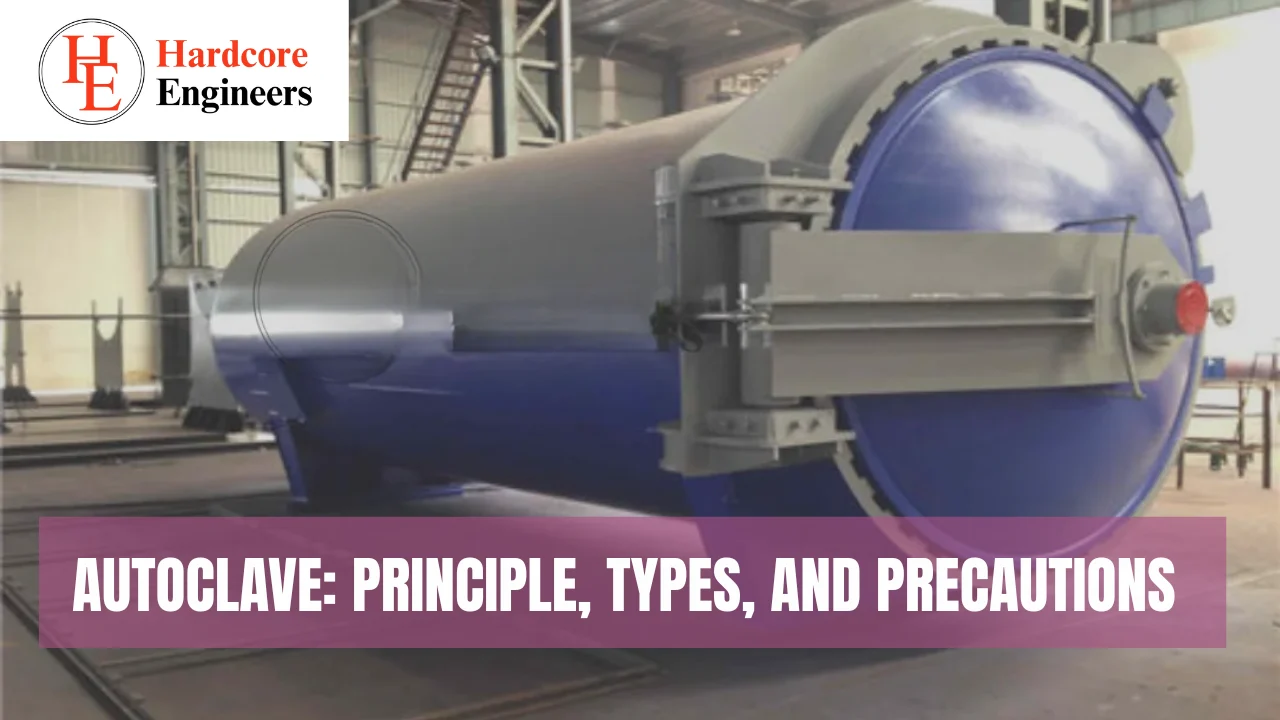
An autoclave is a widely used sterilization equipment in medical, pharmaceutical, laboratory, and industrial sectors. It plays a critical role in eliminating harmful microorganisms such as bacteria, viruses, fungi, and spores by using high-pressure saturated steam. Understanding the working principle, types, and safety precautions of an autoclave helps ensure effective sterilization and safe operation.
An industrial autoclave is a high-pressure vessel used for sterilization, curing, and processing of materials using steam, heat, and pressure. It is widely used in industries such as pharmaceuticals, food processing, hospitals, laboratories, aerospace, rubber manufacturing, and composite production. Industrial autoclaves ensure proper sterilization and controlled processing conditions, making them essential equipment in modern manufacturing.
What is Autoclave
An autoclave is a pressure chamber used to sterilize equipment, materials, and products using high-pressure saturated steam at controlled temperature and time. It is widely used in hospitals, laboratories, pharmaceutical industries, food processing units, and manufacturing plants to eliminate bacteria, viruses, fungi, and spores.
The sterilization process works by heating water to generate steam, which is then introduced into the sealed chamber under pressure. This allows the temperature to rise above the normal boiling point of water (usually around 121°C to 134°C), effectively destroying harmful microorganisms and ensuring complete sterilization.
Autoclaves are commonly used for sterilizing surgical instruments, glassware, culture media, medical waste, and industrial materials. They are considered one of the most reliable and effective sterilization methods in both medical and industrial applications.
Principle of Autoclave
The Autoclave Principle is based on steam sterilization under pressure. When water is heated in a closed chamber, steam builds up and increases pressure. As pressure increases, the boiling point of water rises above 100°C, allowing higher temperatures to be achieved.
Basic Working Steps:
- Loading: Materials are placed inside the autoclave chamber.
- Sealing: The door is tightly locked to maintain pressure.
- Air Removal: Air is removed using vacuum pumps or gravity displacement.
- Steam Injection: Steam is introduced into the chamber.
- Sterilization/Curing: High temperature and pressure are maintained for a specific time.
- Cooling & Depressurizing: Steam is released safely, and materials are removed.
The combination of heat, pressure, and time ensures effective sterilization or curing.
Applications of Autoclave
Autoclaves are commonly used in:
- Hospitals and healthcare centers
- Pharmaceutical and biotechnology industries
- Laboratories and research institutes
- Food processing and packaging units
- Industrial sterilization processes
Types of Autoclave
Industrial autoclaves are available in different types depending on application and working mechanism.
1. Steam Autoclave
This is the most common type used in hospitals, laboratories, and pharmaceutical industries. It uses saturated steam under pressure to sterilize equipment and materials.
Applications:
- Medical instruments
- Laboratory glassware
- Pharmaceutical production
2. Horizontal Autoclave
These are large-capacity autoclaves used in industries for bulk processing. They are horizontally designed for easy loading of heavy materials.
Applications:
- Food processing
- Rubber industry
- Textile industry
3. Vertical Autoclave
Compact and space-saving, vertical autoclaves are used where floor space is limited.
Applications:
- Laboratories
- Small industrial setups
4. Composite Autoclave
Used in aerospace and automotive industries, composite autoclaves cure composite materials such as carbon fiber under precise temperature and pressure control.
Applications:
- Aerospace components
- Automotive parts
5. Rubber Vulcanizing Autoclave
Specifically designed for rubber curing and vulcanization processes.
Applications:
- Rubber products
- Tyres
- Industrial hoses
Autoclave Sterilization Process
The autoclave sterilization process involves the use of high-pressure saturated steam to destroy harmful microorganisms. First, the items to be sterilized are properly cleaned and placed inside the autoclave chamber without overcrowding. Once the door is sealed, air is removed from the chamber and steam is introduced.
The temperature and pressure are then raised, typically to 121°C–134°C, and maintained for a specific holding time to ensure effective sterilization. During this phase, the steam penetrates the materials and kills bacteria, viruses, fungi, and spores. After completion of the cycle, the pressure is gradually released, the load is allowed to cool, and the sterilized items are safely removed for use or storage.
Autoclave Diagram –

An autoclave diagram shows the main parts used for steam sterilization. The key components include:
- Pressure Chamber – Sealed chamber where materials are placed.
- Heating Element – Heats water to produce steam.
- Water Reservoir – Stores water for steam generation.
- Pressure Gauge – Shows internal pressure.
- Temperature Gauge – Displays sterilization temperature (usually 121°C).
- Safety Valve – Releases excess pressure for safety.
- Exhaust Valve – Removes steam after sterilization.
- Door with Lock – Ensures airtight sealing during operation.
The diagram explains how steam under high pressure sterilizes equipment by killing bacteria and microorganisms.
Precautions While Using an Autoclave
To ensure safe and effective operation, the following precautions should be followed:
- Do not overload the autoclave chamber
- Ensure proper cleaning of instruments before sterilization
- Use recommended temperature, pressure, and cycle time
- Allow pressure to release completely before opening the door
- Wear protective gloves and safety gear during loading and unloading
- Regularly inspect and maintain the autoclave
Role of Hardcore Engineers in Autoclave Manufacturing
Hardcore Engineers is a well known name as Industrial Autoclave Manufacturer, offering reliable and efficient sterilization solutions for medical, laboratory, and industrial applications. We focus on robust construction, precise engineering, and compliance with safety standards to deliver high-performance autoclaves.
Hardcore Engineers design autoclaves using high-quality materials and advanced technology to ensure consistent sterilization results, long service life, and user-friendly operation.
Conclusion
An autoclave is an essential sterilization tool that ensures safety, hygiene, and quality across multiple industries. Understanding its principle, types, and precautions helps users achieve optimal performance. With a focus on durability and efficiency, Hardcore Engineers continues to support industries by providing dependable autoclave solutions tailored to modern sterilization needs.