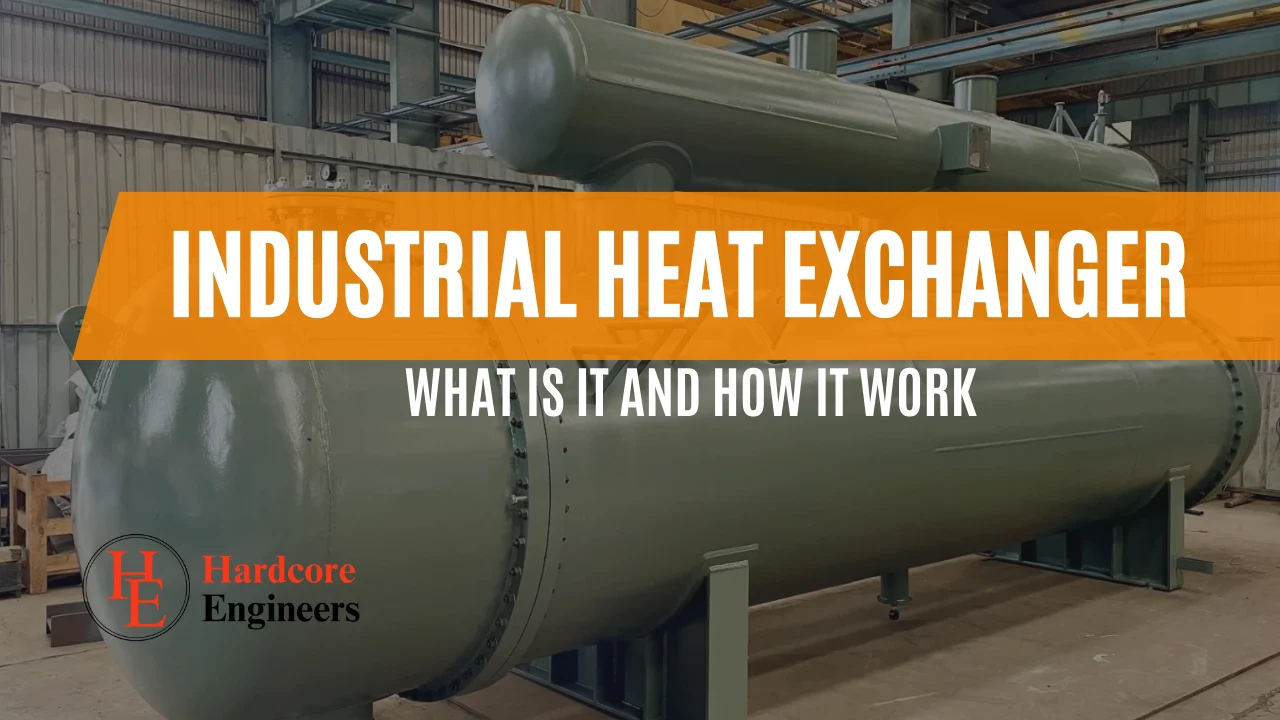
Heat efficiently is critical for smooth operations, energy savings, and equipment safety in industrial applications. One of the most important systems used for this purpose is the industrial heat exchanger. From power plants and chemical factories to food processing and pharmaceuticals, heat exchangers play an important role in transferring heat from one medium to another without mixing them.
This blog explains what an industrial heat exchanger is, how it works, its types, applications, and benefits, industrial heat transfer, heat exchangers in industry, and process heat exchangers.
What Is an Industrial Heat Exchanger?
An industrial heat exchanger is a device designed to transfer heat between two or more fluids (liquid or gas) while keeping them physically separate. The main purpose is to either heat or cool a process fluid efficiently.
Heat exchangers allow industries to reuse heat, control temperatures, and improve overall process efficiency. They are essential wherever controlled heating or cooling is required.
Hardcore Engineer specialize in designing and manufacturing high-performance heat exchangers that meet the demanding needs of modern industrial processes.
How Heat Transfer Work?
Heat transfer is the process by which heat energy moves from a higher-temperature object or area to a lower-temperature one. This continues until both reach the same temperature. Heat transfer happens in three main ways.
Conduction occurs when heat moves through a solid material. The particles in the hot area vibrate faster and pass energy to nearby particles. Metals are good conductors, which is why they are commonly used in heat exchangers.
Convection happens in liquids and gases. When a fluid is heated, it becomes lighter and rises, while cooler fluid moves down to take its place. This movement helps carry heat from one place to another, such as in air conditioners or cooling systems.
Radiation transfers heat through electromagnetic waves and does not need any medium. Heat from the sun reaching the earth is a common example. Radiation is important in high-temperature industrial processes.
In industrial systems, these three methods often work together to transfer heat efficiently and maintain proper temperature control.
Heat Exchanger Process Explained
The heat exchanger process is used to transfer heat from one fluid to another without mixing them. This process helps industries heat or cool liquids and gases efficiently while saving energy.
Step-by-Step Heat Exchanger Process
- Fluid Entry: Two fluids enter the heat exchanger. One fluid is hot, and the other is cold.
- Heat Transfer: Heat moves from the hot fluid to the cold fluid through metal surfaces such as tubes or plates.
- No Mixing of Fluids: The fluids remain separated, ensuring safe and clean operation.
- Temperature Control: The hot fluid cools down, and the cold fluid warms up to the required temperature.
- Fluid Exit: Both fluids leave the heat exchanger after achieving the desired heat exchange.
Importance of Industrial Heat Transfer
Industrial heat transfer is the movement of thermal energy from one place to another during manufacturing or processing operations. Efficient heat transfer is essential because:
- It reduces energy consumption
- Improves process control
- Enhances product quality
- Protects equipment from overheating
- Lowers operating costs
Heat exchangers are the backbone of industrial heat transfer systems, ensuring heat is moved safely and efficiently across processes.
How Does an Industrial Heat Exchanger Work?
The working principle of a heat exchanger is simple yet highly effective.
- Two fluids enter the heat exchanger
One fluid is hot, and the other is cold. - Heat transfer takes place
Heat moves from the hot fluid to the cold fluid through a solid barrier (metal plates or tubes). - No mixing of fluids
The fluids flow through separate channels, preventing contamination. - Temperature adjustment
The hot fluid cools down, and the cold fluid warms up to the desired level.
This controlled exchange makes heat exchangers reliable and safe for use in sensitive industrial environments.
Types of Heat Exchangers Used in Industry
Different industries require different designs based on pressure, temperature, and fluid type. Common heat exchangers in industry include:
1. Shell and Tube Heat Exchanger
This is one of the most widely used process heat exchangers. It consists of tubes inside a shell, where one fluid flows through the tubes and another around them.
Applications:
- Oil & gas industry
- Chemical processing
- Power plants
2. Plate Heat Exchanger
Made of thin metal plates stacked together, this type provides high heat transfer efficiency in a compact size.
Applications:
- Food and beverage processing
- HVAC systems
- Pharmaceutical industries
3. Air Cooled Heat Exchanger
Uses air instead of water to cool fluids, making it suitable for areas with limited water availability.
Applications:
- Refineries
- Petrochemical plants
- Remote industrial locations
4. Double Pipe Heat Exchanger
A simple design where one pipe is placed inside another, commonly used for small-scale heat transfer.
Applications:
- Pilot plants
- Low-capacity industrial processes
Role of Process Heat Exchangers in Manufacturing
A process heat exchanger is specifically designed to support continuous industrial processes. These exchangers help maintain precise temperatures during chemical reactions, heating, cooling, evaporation, or condensation.
Industries depend on process heat exchangers to:
- Maintain consistent product quality
- Ensure process safety
- Increase production efficiency
- Reduce heat loss
Hardcore Engineer focuses on delivering robust process heat exchangers that perform reliably under high pressure and temperature conditions.
Applications of Heat Exchangers in Industry
Heat exchangers are used across almost every industrial sector:
- Chemical Industry: Heating and cooling chemical reactions
- Power Plants: Steam condensation and feedwater heating
- Food Processing: Pasteurization and cooling
- Pharmaceuticals: Temperature control in clean processes
- Oil & Gas: Crude oil heating and cooling
- HVAC Systems: Climate control in large buildings
These wide applications prove how essential heat exchangers are to industrial operations.
Benefits of Using Industrial Heat Exchangers
Using the right heat exchanger offers multiple advantages:
- High energy efficiency
- Lower fuel and electricity costs
- Improved process reliability
- Reduced environmental impact
- Longer equipment life
- Better temperature control
Well-designed systems from experienced manufacturers like Hardcore Engineer help industries achieve long-term operational stability.
Key Factors to Consider When Choosing a Heat Exchanger
Before selecting a heat exchanger, industries should consider:
- Operating temperature and pressure
- Type of fluid (liquid or gas)
- Heat transfer requirement
- Space availability
- Maintenance needs
- Material compatibility
Custom-engineered solutions ensure optimal performance and safety.
Why Choose Hardcore Engineer?
Hardcore Engineer is a trusted name in the field of industrial heat transfer solutions. We design and manufacture high-quality heat exchangers for industries that meet international standards. Our heat exchangers are built with high-quality materials to ensure efficient heat transfer, long service life, and reliable performance in industrial applications.
- Strong engineering expertise
- Durable and efficient designs
- Customized process heat exchangers
- Focus on performance and safety
- Reliable after-sales support
Our commitment to quality and customer centric product makes us a preferred choice for industries looking for dependable heat exchanger solutions
Conclusion
An industrial heat exchanger is a vital component in modern manufacturing and processing industries. By enabling efficient industrial heat transfer, heat exchangers help control temperatures, save energy, and ensure smooth operations.
From basic cooling needs to complex process heat exchanger applications, selecting the right design and manufacturer is crucial. With advanced engineering capabilities and industry experience, Hardcore Engineer continues to support industries with efficient, reliable, and long-lasting heat exchanger solutions.
If your industry relies on precise temperature control and energy efficiency, interested in investing in the right heat exchanger is not just an option—it’s a necessity.